Bleeding after birth
Prevention, diagnosis and treatment of postpartum haemorrhage
Program partners



Introduction
Bleeding after birth is a course for all levels of health workers who care for women at birth. It incorporates the latest World Health Organization (WHO) Consolidated guidelines for the prevention, diagnosis and treatment of postpartum haemorrhage (PPH), and equips you and your team with skills and knowledge to prevent, diagnose and manage PPH.
Learning objectives
By the end of the course, participants should be able to recall, identify and demonstrate the steps to prevent, diagnose and treat PPH, according to the consolidated PPH guidelines by WHO, FIGO and ICM.
Duration
Two days.
Facilitator-to-participant ratio
1 facilitator for every group of 6 participants.
Learning materials
Download and preview the materials you will need. You should also have printed materials during a training. You can download the printing files free of charge to print locally. To calculate how many copies you need, keep in mind that there should be one facilitator for every group of six participants.
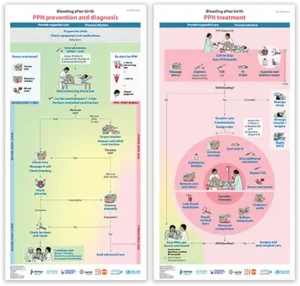
Action Plans
Two posters showing the steps to take during care, to use both during training and as a job aid for clinical practice.
1 set per group (facilitator + 6 participants), and enough to leave at each facility to be used in clinical care.
- Action plansEnglish
Flipchart
Paper-based facilitation tool, with guidance for facilitators to demonstrate, lead discussions and support practice.
1 per group (facilitator + 6 participants)
- FlipchartEnglish
Provider Guide
A booklet for every participant to use during the course, and afterwards to support continuous practice and quality improvement in the facility. It includes short activities that teams can use frequently to strengthen and maintain competencies at the facility. You will also find tools and information to further support you during practice and clinical care.
Can be also printed out as sheets in a normal office printer.
1 per participant
- Provider guideEnglish
E-learning
A self-paced online course on the WHO Academy, as a companion to the facilitated course.
Videos
-
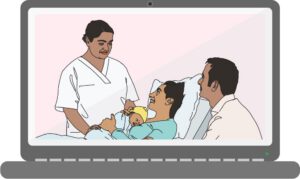
Real birth videos by Global Health Media
Assessments
As part of the learning process, every training program includes assessments for the participants. You can download and print the assessments.
Equipment
Every group of 6 of participants will need these items to practice during the training. The equipment should also be available for practice in the facilities after the training.
Learning materials
- 1 Flip Chart
- 1 set of Action Plans
- 6 Provider Guides (1 per participant)
Simulation equipment
- PPH simulator with placenta and baby
- Simulated blood
Postpartum equipment
- Blood loss measurement tool
- Postpartum monitoring form
- Curved forceps
- Ring forceps
- Scissors
- Ties/haemostats or clamps
- Cloths and hat for newborn
- Suction bulb
- Bag and mask
- NASG – if using
- UBT – if using
General equipment
- Personal Protective Equipment
- Blood pressure cuff and stethoscope
- Syringes and needles
- Blood collection tubes
- Speculum
- Urinary catheter and bag
Mock medications and IV
- Oxytocin or other uterotonics
- Tranexamic acid (TXA)
- Antibiotic
- Pain medication
- IV catheter
- Crystalloid IV fluids
- Tape
Additional materials
- Knowledge assessments and OSCEs sheets
- Postpartum monitoring forms
- Demonstration videos on a device with good sound
Templates
Download and modify these documents to fit your needs when preparing and evaluating your course.
- Agenda for the health worker’s course at the facility
- Agenda for the master trainer or trainer course
- Training cascade preparation
- Course certificates